
How to Summarize a Very Long PDF with Artificial Intelligence: The Complete Guide to Creating Enhanced Summaries at Minimal Cost
Analyzing a lengthy PDF document presents a particular challenge for researchers, journalists, writers, students, information specialists and other professionals working with large volumes of information. When a report runs to several hundred pages, a book contains hundreds of thousands of words, or a case file brings together dozens of documents, producing a genuinely comprehensive and detailed summary becomes a complex undertaking.
A conventional summary generally condenses the main ideas. An AI-powered enhanced summary pursues a considerably more ambitious objective: reconstructing the document’s intellectual architecture, identifying its central arguments, extracting significant data, connecting information scattered throughout the text, highlighting contradictions and producing a structured, detailed and practical account of its contents.
Several approaches are now available to automate this process, ranging from free AI interfaces to APIs that provide access to powerful models without necessarily requiring a recurring monthly subscription.
The challenge is to identify an architecture capable of processing very long PDFs, preserving documentary accuracy and producing summaries running to several thousand words, while keeping costs under control.
This guide examines the main solutions available, the advantages and limitations of each approach, and a practical methodology for transforming a lengthy PDF into a comprehensive research document.
1. Why Long PDFs Require a Specific Approach
A PDF is not necessarily a simple text file. It may contain paragraphs, tables, charts, footnotes, bibliographical references, illustrations, mathematical formulas or pages scanned as images.
This diversity considerably complicates automated analysis.
1.1. The Problem of Document Length
Language models have a context window that determines how much information they can process during a given interaction. This capacity is generally expressed in tokens, a unit of processing that does not correspond exactly to individual words.
A 100-page PDF may contain several tens of thousands of words. A 500-page book may run to several hundred thousand words, depending on its textual density, tables and illustrations.
Document length alone, however, does not determine the difficulty of the task. A 150-page scientific report containing complex tables may be more demanding than a 400-page novel.
Three limitations must be distinguished:
- Input capacity: the volume of text, images and data that the model can accept.
- Analytical capacity: the model’s ability to preserve relationships between information scattered throughout the document.
- Output capacity: its ability to produce a sufficiently detailed summary without eliminating important nuances.
A model capable of accepting a very large document does not, by itself, guarantee exhaustive analysis.
1.2. The Risk of Losing Essential Information
When a document is particularly long, certain details acquire their full significance only when considered alongside passages appearing dozens of pages later.
An economic study, for example, may introduce a hypothesis at the beginning of a report, qualify it in an intermediate chapter and subsequently limit its scope in the conclusion.
A superficial summary may retain the initial hypothesis while omitting the qualifications introduced later.
The most common difficulties include:
- The disappearance of secondary arguments that nevertheless prove decisive.
- The omission of methodological reservations.
- Confusion between hypotheses, findings and interpretations.
- The loss of numerical references.
- The failure to establish connections between chapters.
- The transformation of uncertainty into categorical statements.
- The excessive simplification of complex reasoning.
The objective is therefore not merely to fit a document into a context window. It is to design a process that preserves the intellectual structure of the text.
1.3. Scanned PDFs and Optical Character Recognition
Some PDFs contain directly extractable text. Others consist of photographed or scanned pages.
In the latter case, optical character recognition, commonly known as OCR, may be necessary.
This process converts visible characters in images into text that can be processed by analytical tools.
A reliable processing pipeline should check:
- Whether the document contains extractable text.
- Whether scanned pages require OCR.
- Whether tables have been interpreted correctly.
- Whether accents, numbers and symbols have been preserved.
- Whether multi-column reading order is consistent.
- Whether page numbers can be retained.
An extraction error can propagate throughout the entire summary. Checking text quality is therefore a fundamental step.
2. Conventional Summaries vs. Enhanced Summaries: Two Different Objectives
The expression “AI PDF summarization” encompasses several substantially different types of service.
2.1. The Short Summary
A conventional summary aims to present the main ideas in a few paragraphs.
It is particularly useful for:
- Quickly understanding a report.
- Identifying the subject of a book.
- Preparing for a meeting.
- Deciding whether a document warrants closer examination.
This approach prioritizes speed and concision. It does not necessarily seek to preserve every nuance of the original text.
2.2. The In-Depth Summary
An enhanced summary pursues a more ambitious objective. It reconstructs the document’s reasoning and develops its most important elements into a self-contained text.
It may include:
- A general overview of the subject.
- A detailed summary of each chapter.
- An analysis of primary and secondary arguments.
- An examination of concepts and definitions.
- An extraction of statistical data.
- A summary of tables and figures.
- A map of the actors, events or concepts involved.
- An account of hypotheses and their limitations.
- An analysis of convergences and contradictions.
- A list of relevant quotations with page references.
- A specialist glossary.
- An annotated bibliography, where the references are available.
- An analytical conclusion and suggestions for further research.
The added value lies in transforming a document that is difficult to navigate into a structured, searchable and reusable research resource.
2.3. Is It Possible to Produce a Summary Several Dozen Pages Long?
Yes, provided that output length is distinguished from the actual quality of the analysis.
A model can produce a lengthy text without being exhaustive. Conversely, a summary that is too short may eliminate essential information.
The right approach is to define a precise set of requirements: desired length, level of detail, categories of information to preserve, presentation structure and traceability requirements.
For a report containing several hundred pages, a summary of 10 to 30 pages may be a reasonable target. The final length should nevertheless depend on the document’s density and complexity.
A scientific study, a philosophical essay and a financial report do not require the same degree of compression.
3. Free APIs for Analyzing PDFs with AI
An API, or Application Programming Interface, allows one software application to communicate with an external service.
In artificial intelligence, APIs provide access to models without necessarily requiring users to work through the provider’s consumer-facing interface.
This architecture offers an economic advantage: some platforms provide free quotas, while others charge according to the number of tokens consumed.
It is therefore possible to build a personal document summarization tool without automatically committing to a monthly subscription costing several dozen euros.
Three components must nevertheless be distinguished:
- The AI model that performs the analysis.
- The API through which the model is accessed.
- The application that imports the PDF, organizes requests and presents the results.
A free API is not necessarily a ready-to-use application. An additional interface may be required to upload files and generate summaries.
3.1. The Main Options to Consider
Several services deserve particular attention:
| Service | Main advantage | Key limitation |
|---|---|---|
| Google AI Studio and Gemini API | Testing Gemini models with access to a free tier | Limits depend on the model and account |
| OpenRouter | Accessing several models through a common API interface | Free models are subject to quotas and changing availability |
| GroqCloud | Fast inference for selected models compatible with its API | Rate and token limits vary by model |
| DeepSeek API | Access to reasoning models with usage-based billing | Costs depend on the model, volume and current pricing |
| Ollama | Running certain models directly on a computer | Performance depends on hardware and model selection |
These services are not interchangeable. Some accept files or images through specific features, while others are primarily designed to receive text-based messages.
PDF support should therefore be verified before selecting a provider.
4. Google Gemini API and Google AI Studio
Google AI Studio is an interesting starting point for experimenting with document analysis using Gemini models.
The Gemini API allows developers to integrate these models into their own applications. Depending on the model, available features and applicable quotas, the service can handle substantial volumes of text and multimodal content.
4.1. Why Gemini Deserves Particular Attention
For long-document summarization, several characteristics matter:
- Context-window size.
- The ability to process submitted documents.
- The quality of its understanding of French.
- The generation of structured responses.
- Support for PDF files and their visual content.
- Available free quotas.
- The potential cost of large-scale processing.
A large context window can be particularly useful when a document contains numerous chapters whose arguments must be considered together.
However, the precise limits of the selected model must always be checked. An advertised token capacity does not mean that every file will be accepted without restriction, nor that every page will be analyzed with equal accuracy.

4.2. How to Get Started for Free
Official website: https://aistudio.google.com/
The general procedure is as follows:
- Open Google AI Studio.
- Sign in with a Google account.
- Select a model compatible with document analysis.
- Generate an API key through the appropriate settings.
- Consult the documentation to establish the model’s limits.
- Test an initial request using a non-confidential PDF.
- Evaluate the quality of the response before processing larger documents.
The API key must be stored securely. It should never be published in a code repository, embedded directly in a public-facing webpage or shared in a publicly accessible document.
4.3. Free Access Comes with Conditions
The free tier of the Gemini API allows certain features to be tested without paying for the relevant tokens, subject to the models and quotas available.
Free access should not, however, be confused with unrestricted usage.
Limitations may concern:
- Requests per minute.
- Daily request quotas.
- Token volumes.
- Available models.
- Service availability.
- Data-processing conditions.
Official documentation also makes an important distinction: data submitted through the free tier may be used to improve Google’s products, whereas different conditions are stated for the paid API tier. The applicable terms should be checked before processing highly confidential documents.
For personal experimentation, the free tier may be a useful starting point. For confidential documents or regular professional use, privacy terms and contractual safeguards deserve closer scrutiny.
5. OpenRouter: Access Multiple Models Through a Single API
OpenRouter is an aggregation platform that allows users to query different AI models through a common API interface.
This approach simplifies experimentation: instead of building a separate integration for every provider, an application can use a common endpoint and select the desired model.
5.1. Why OpenRouter Is Interesting for PDF Summarization
Its main advantage is the ability to compare several models using the same document.
One model may be better suited to rapid information extraction, another to complex reasoning, and a third to final drafting.
This arrangement makes it possible to choose the best balance between cost, speed and quality.
OpenRouter also offers models identified as free. The exact conditions vary according to the available models and their providers.
5.2. Limitations of the Free Tier
The free tier is useful for testing, prototyping and occasional use. It should not be regarded as a guaranteed solution for processing very large volumes of documents every day.
Limitations may include:
- Restricted numbers of requests.
- Rate limits.
- Variable model availability.
- Longer response times.
- Provider-specific restrictions.
- Differences in model capabilities.
Free models are not necessarily the most suitable for producing an exhaustive summary of several hundred pages.
Routing configurations also require attention. If paid models are included as fallback options, some requests may become billable. A strictly free configuration must exclude paid models from its fallback mechanism.
5.3. How to Get Started
Platform: https://openrouter.ai/
- Create an account.
- Generate an API key.
- Choose a free model compatible with the task.
- Check its limits and access conditions.
- Test a short request.
- Connect the API to a document-processing interface.
- Monitor usage and potential errors.
Official documentation and pricing should be checked before making significant changes to the selected model or processing strategy.
6. Groq: A Fast API for Text Processing
GroqCloud provides an API for querying different language models through infrastructure optimized for inference.
Its principal advantage is generation speed. This can be useful when document processing requires numerous successive requests.
6.1. How Groq Can Be Used in a Document Processing Pipeline
Groq can contribute to several stages:
- Summarizing text extracts.
- Classifying passages by subject.
- Extracting concepts and keywords.
- Turning intermediate notes into structured paragraphs.
- Producing a final synthesis from chapter summaries.
This approach is particularly relevant when the PDF has already been converted into text by an external tool.
Speed of inference should not, however, be confused with the ability to understand a document as a whole. A very fast model may still be limited by its context window, reasoning capabilities or quotas.
6.2. A Service Subject to Quotas
Official documentation: https://console.groq.com/docs/rate-limits
Groq’s limits vary by model and may concern request frequency, token counts or total usage over a given period.
The free tier may be suitable for experiments and certain personal projects, but it is not necessarily designed for continuous processing of very large documents.
The most effective approach is to send properly prepared text segments to Groq, then aggregate the results in a separate stage.
7. DeepSeek and Low-Cost Paid APIs
Paid APIs can become particularly attractive when free quotas are no longer sufficient.
Unlike a fixed subscription, usage-based billing generally allows users to pay according to actual consumption, subject to the provider’s pricing and billing rules.
DeepSeek is one of the options worth considering for applications requiring reasoning and text-processing capabilities.
7.1. Understanding Token-Based Billing
The cost of a request depends primarily on several factors:
- The number of input tokens sent to the model.
- The number of output tokens generated.
- The selected model.
- Any additional tokens associated with reasoning.
- Caching mechanisms, where available.
- Document-processing features used.
The simplified formula is:
Total cost = input-token cost + output-token cost + any additional charges.
Since prices may change, the provider’s current pricing page should be consulted before use.
7.2. Why Long Summaries Can Still Be Affordable
A document summary can be divided into several operations:
- Extracting text from the PDF.
- Summarizing individual chapters.
- Extracting facts and arguments.
- Comparing intermediate summaries.
- Drafting the final synthesis.
This method generates more requests than a single-step summary. It can nevertheless improve the quality of the result considerably.
The objective is not to multiply API calls indiscriminately, but to allocate resources to passages that genuinely require more detailed analysis.
For exact access conditions, DeepSeek’s official documentation is the appropriate reference: https://api-docs.deepseek.com/
7.3. Why Price Should Not Be the Only Criterion
A low-cost model may be perfectly suitable for keyword extraction while proving less effective for complex philosophical, legal or scientific analysis.
Model selection should therefore be based on comparative testing.
For the same PDF, it is possible to measure:
- Fidelity to the original arguments.
- The number of important omissions.
- Numerical accuracy.
- The quality of page references.
- Structural coherence.
- The ability to identify uncertainty.
- Total processing cost.
The cheapest model is not always the most economical if its errors require extensive correction.

8. Which Interface Should You Use to Upload PDFs?
An API provides the analytical engine, but it does not necessarily constitute a complete working interface.
Several solutions can be considered when the aim is to work with documents without immediately developing an application.
8.1. Chatbox
Chatbox provides a conversational interface that can connect to certain model providers through APIs.
Official website: https://chatboxai.app/
Its advantage is a graphical environment for submitting requests and evaluating results.
Before choosing this solution, check its PDF support, the selected provider, file-size restrictions and the way documents are transmitted to the model.
8.2. Open WebUI
Open WebUI provides a conversational interface with various model integrations and document-management capabilities.
Official website: https://openwebui.com/
It may be suitable for a more sophisticated environment in which documents are grouped, queried and reused over time.
The distinction between a locally running interface and remote processing is essential. If a cloud API is used, the relevant data leaves the computer and is processed by the external provider.
8.3. AnythingLLM
AnythingLLM is another option for building a document-oriented environment incorporating files, workspaces and different models.
Official website: https://anythingllm.com/
Its main appeal includes retrieval-augmented generation, commonly abbreviated as RAG.
This approach makes it possible to search for relevant passages in a document collection before sending them to a model.
It is particularly useful for collections that need to be queried repeatedly, for example when preparing articles, comparing reports or retrieving quotations.
8.4. Is RAG Better Than Sending the Entire PDF?
It depends on the objective.
Sending an entire document can be appropriate when it is sufficiently short and the model has suitable processing capacity.
RAG is particularly useful when the corpus is very large, when questions are specific or when documents must be reused regularly.
However, passage-based retrieval can overlook broader relationships between chapters. To produce an exhaustive summary, RAG should therefore be complemented by a structured analysis of the document as a whole.
9. The Best Method for Summarizing a PDF Containing Hundreds of Pages
To produce a long, detailed and coherent summary, a hybrid approach is generally more robust than submitting a single request to a model.
It relies on a hierarchical process: the document is first examined as a whole, then divided into manageable units, before the results are brought together and reorganized.
9.1. Step 1: Analyze the Document’s Structure
Before generating the summary, identify:
- The title and authors.
- The publication date.
- The table of contents.
- The number of pages.
- Chapters and subsections.
- Appendices.
- Tables and figures.
- Bibliographical references.
This preliminary examination makes it possible to construct a map of the document.
The objective is to establish what the PDF contains before attempting to summarize its parts.
9.2. Step 2: Extract the Text and Preserve Page References
Text extraction should preserve page numbers, headings and section boundaries wherever possible.
This precaution makes subsequent verification easier.
For documents containing tables, charts or formulas, specialized tools or visual-processing capabilities may be required.
The extracted text should be checked before being submitted to the AI model.
9.3. Step 3: Divide the Text into Coherent Segments
The document can then be divided into blocks corresponding to chapters or sections.
Semantic boundaries are preferable to arbitrary cuts at fixed intervals.
Each segment can contain:
- A heading.
- A chapter reference.
- Page numbers.
- The corresponding text.
- Relevant metadata.
Segment size should be adapted to the model, the complexity of the text and the required level of detail.
9.4. Step 4: Summarize Each Segment
Each section is analyzed separately using a demanding prompt.
The model should extract the main arguments, important secondary points, figures, examples, objections and methodological reservations.
It should also flag ambiguous passages and preserve page references whenever available.
The result should not be a minimalist summary, but a sufficiently detailed research note to support a later synthesis without requiring the entire analysis to be repeated.
9.5. Step 5: Build an Intermediate Synthesis
The chapter summaries are then combined to create a global representation of the document.
This stage identifies:
- Recurring themes.
- Complementary arguments.
- Internal contradictions.
- Developments in the reasoning.
- Concepts defined in several places.
- Data requiring verification.
- Information omitted from the initial summaries.
An intermediate synthesis provides a checkpoint between local analysis and final drafting.
9.6. Step 6: Write the Enhanced Summary
Using this structure, the model produces a self-contained document.
The final version can follow the original outline or adopt a thematic organization better suited to understanding the subject.
It is essential not to confuse paraphrasing with invention: interpretations must remain distinct from information explicitly contained in the PDF.
9.7. Step 7: Conduct a Fidelity Audit
The final stage involves checking the summary against the original document.
Important claims, figures, quotations and conclusions should be traceable to the relevant pages.
A verification checklist may include:
- Have all the main arguments been retained?
- Do the conclusions respect the document’s qualifications and reservations?
- Have the figures been transcribed correctly?
- Are the quotations accurate?
- Do the cited page numbers correspond to the relevant passages?
- Have contradictions been identified?
- Is information absent from the source clearly distinguished?
This final review improves reliability and traceability.
10. Building a Multi-Stage Document Summarization Pipeline
A robust architecture can be designed as a sequence of independent modules.
Each module performs a specific task and passes its output to the next.
10.1. General Architecture
Original PDF → Text Extraction → Structural Analysis → Segmentation → Section Summaries → Global Synthesis → Enhanced Draft → Verification
This organization offers several advantages.
First, an extraction error can be corrected without restarting the entire process. Second, intermediate summaries can be stored and reused. Finally, the concluding synthesis can be generated using a different model from the one used for the initial analysis.

10.2. Separating Extraction, Analysis and Writing
It is preferable not to ask a single model to perform every operation simultaneously.
Extraction is a document-processing task. Analysis requires an understanding of relationships between pieces of information. Writing involves prioritizing arguments and producing fluent prose.
Separating these tasks makes the results easier to control.
It also allows a fast model to handle straightforward operations and a more capable model to tackle the most complex passages.
10.3. The Role of an Intermediate Document Database
Results can be stored in a structured database containing:
- The filename.
- PDF metadata.
- Chapters.
- Extracted passages.
- Page numbers.
- Intermediate summaries.
- References used.
- Verification results.
- The version of the model employed.
This organization makes it easier to resume work after an interruption.
It also makes it possible to trace the origin of a claim and update the summary when a new version of the PDF becomes available.
10.4. Why Preserve Intermediate Summaries?
Intermediate summaries eliminate the need to reprocess the entire document every time.
They make it possible to compare different models, modify the final structure and generate several deliverables from the same analysis.
A single report can thus produce a reading note, a journalistic synthesis, a thematic dossier, a glossary or a critical analysis.
The original PDF must nevertheless be retained: an intermediate summary never necessarily contains all the information in the source document.
11. A Prompt for Producing a Highly Detailed Summary
The quality of a summary depends as much on the processing method as on the instructions given to the model.
An effective prompt must specify the expected role, the depth of analysis, the categories of information to preserve and the rules governing documentary fidelity.
The model should not merely “summarize”. It should produce a genuine analytical account.
11.1. Prompt for an In-Depth Document Summary
The following instructions can serve as the basis for a PDF-processing interface.
ROLE

Act as a scientific information specialist, an information
analyst and a writer specializing in the synthesis of complex
documents.

OBJECTIVE

Produce a detailed, structured, accurate and faithful
summary of the supplied document.

The summary must enable readers to understand the substance
of the document without immediately having to read the entire
original PDF.

FIDELITY TO THE SOURCE

- Do not invent information.
- Do not present a hypothesis as an established fact.
- Preserve nuances, reservations and stated limitations.
- Distinguish explicit information from interpretation.
- Identify contradictions and ambiguities.
- Never fabricate quotations, references or page numbers.
- Clearly indicate when information cannot be verified
  from the document.

CONTENT ANALYSIS

1. Present the general subject and central problem.
2. Identify the main thesis and the document's objectives.
3. Reconstruct its structure and argumentative framework.
4. Analyze every chapter and subsection.
5. Preserve important primary and secondary arguments.
6. Extract figures, dates, names, concepts and definitions.
7. Present significant examples and case studies.
8. Identify contradictions and developments in the reasoning.
9. Highlight methodological limitations and uncertainties.
10. Connect information that relates to different parts
    of the document.

REFERENCES

Associate important claims with their page numbers whenever
the numbers are available and verifiable.

For direct quotations, reproduce the original text accurately
and distinguish quotations from paraphrases.

SUMMARY STRUCTURE

I. General presentation of the document
II. Central question and main thesis
III. Detailed chapter-by-chapter summary
IV. Essential concepts and definitions
V. Primary and secondary arguments
VI. Significant figures and findings
VII. Examples and case studies
VIII. Contradictions, debates and limitations
IX. The author's conclusions
X. Cross-cutting synthesis
XI. Glossary
XII. Points requiring verification in the original document

LEVEL OF DETAIL

Prioritize a developed summary over a superficial overview.

Do not remove an important argument merely to reduce the
length of the text.

If the volume of information exceeds the available processing
capacity, work section by section and preserve intermediate
results.

Before writing the final synthesis, verify that the main
sections of the document have been covered.

STYLE

Write in precise, fluent, rigorous and nuanced English.
Avoid repetition, generalities and empty formulations.

The final text must be self-contained, clearly structured
and suitable for research, writing or further study.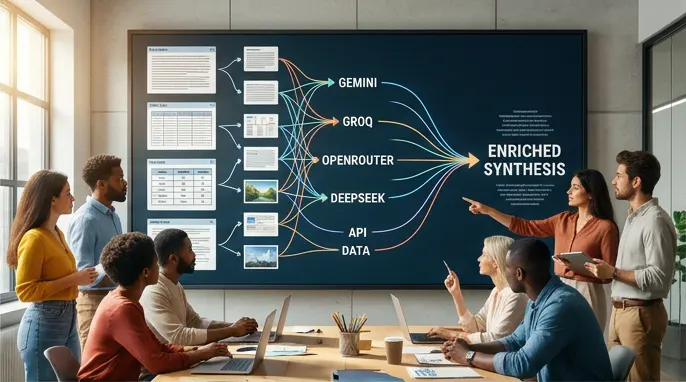
11.2. Adapting the Prompt to the Subject
A scientific summary should pay particular attention to experimental protocols, findings, biases and statistical limitations.
A legal summary must preserve legal references, classifications, exceptions and the distinctions between general rules and specific cases.
A philosophical summary should reconstruct concepts, premises, objections and argumentative transitions without reducing complex reasoning to slogans.
A journalistic summary should identify established facts, sources, actors, timelines and claims requiring independent verification.
The prompt should therefore be adapted to the nature of the document rather than reused unchanged for every subject.
12. Reducing Costs Through APIs and Intelligent Processing
One of the main advantages of an API is the possibility of usage-based billing, where the provider offers this pricing model.
The total cost, however, depends on the chosen method.
12.1. Why Costs Vary from One PDF to Another
Two documents of equal length may require different amounts of processing.
A report consisting mainly of text will generally be easier to handle than a document containing complex tables, images, formulas or difficult-to-extract appendices.
The requested summary length also matters. Producing a 20-page synthesis requires more generation than producing a 500-word overview.
The cost therefore depends on:
- The volume of extracted text.
- The number of segments.
- The number of API calls.
- The selected model.
- The length of intermediate outputs.
- The length of the final synthesis.
- Any verification operations.
12.2. A Practical Cost Calculation
Consider a hypothetical 100-page PDF.
The document is extracted and divided into 20 segments. Each segment is analyzed separately, the results are consolidated, and a final synthesis is drafted.
To estimate the cost, the input and output tokens from every request must be added together, and the applicable model prices must then be applied.
It would be misleading to claim that this operation invariably costs just a few cents. The actual amount depends on current pricing, document size, generated output and the number of processing stages required.
The most reliable method is to measure the cost of an initial representative document and then extrapolate from the results.
12.3. Using Different Models for Different Tasks
A cost-efficient architecture can distribute operations across several models.
| Operation | Preferred approach |
|---|---|
| Text extraction | Local document-processing tool |
| Topic identification | Fast, economical model |
| Section summaries | Model offering a strong balance between quality and cost |
| Contradiction analysis | Model with suitable reasoning capabilities |
| Final drafting | Model proficient in long-form synthesis |
| Citation verification | Targeted searches in the original document |
This approach avoids routinely using an expensive model for straightforward operations.
12.4. Setting Spending Limits
A personal tool should include cost-control mechanisms:
- A maximum budget per document.
- A preliminary cost estimate.
- A token limit per request.
- Confirmation before expensive processing begins.
- A spending history.
- The ability to interrupt an operation.
- Monitoring of fallback requests to paid models.
These safeguards are particularly useful when several hundred pages must be processed automatically.
13. The Limitations of Artificial Intelligence Models
Even the most capable models can make mistakes. A lengthy summary should never be treated as a perfectly faithful reproduction of the original document.
13.1. Hallucinations
A model may invent a reference, attribute a statement to the wrong author or generate a figure that does not appear in the PDF.
This is particularly problematic in scientific, legal, historical and journalistic contexts.
The solution is to request precise references, retain the source passages and verify important claims.
13.2. Omissions
A summary may read fluently while overlooking a decisive piece of information.
Chapter-by-chapter analysis helps reduce this risk, although it cannot eliminate it entirely.
A checklist of essential sections and themes provides an additional safeguard.
13.3. Reasoning Errors
A model may connect two pieces of information that are not directly comparable, confuse correlation with causation or attribute an intention that has not been demonstrated.
The summary must therefore distinguish facts reported by the author, the author’s interpretations and conclusions introduced by the model.
13.4. Limitations of Hierarchical Summarization
The multi-stage method has a risk of its own: information lost during a chapter summary may disappear permanently from the final synthesis.
To reduce this risk, intermediate summaries must preserve important details, references and uncertainties.
Key passages can be checked directly against the original document before the final draft is written.
14. Confidentiality, Security and Intellectual Property
Using an API requires an understanding of where documents are transmitted and which rules govern their processing.
14.1. Local Processing Is Not the Same as Cloud Processing
If text is extracted locally and then sent to a remote model, the processing is not entirely local.
Depending on the architecture, the API provider may receive some or all of the document’s contents.
Before submitting a PDF, check the data-retention policy, any potential use for model improvement, deletion options and applicable contractual safeguards.
14.2. Confidential Documents
Contracts, medical records, personal data, internal documents and commercial information require particular care.
An API key does not, by itself, guarantee the confidentiality of transmitted files.
For sensitive documents, it is advisable to examine local-processing options, the conditions of professional plans and the available data-minimization measures.
14.3. Copyright
The technical ability to summarize a document does not mean that every possible use is legally permitted.
Reproducing passages, distributing a highly detailed summary or commercially reusing protected material may raise intellectual-property issues.
Applicable copyright rules, service terms and citation obligations should be respected.

15. Comparing the Available Solutions
The right choice depends primarily on PDF length, the required level of detail, frequency of use and confidentiality requirements.
| Solution | Potential cost | Main strengths | Main limitations |
|---|---|---|---|
| Google AI Studio | Free within the limits of the free tier | Rapid testing and access to selected Gemini models | Variable quotas, data terms and model limits |
| Paid Gemini API | Usage-based | Integration into a custom tool | Costs and limits depend on the model |
| Free OpenRouter | Free within the applicable limits | Access to different models | Variable quotas and availability |
| Paid OpenRouter | Usage-based | Model selection and a common API interface | Model billing and applicable charges |
| GroqCloud | Free tier and paid options, subject to current terms | Fast processing | Variable quotas and capabilities |
| DeepSeek API | Usage-based, according to current pricing | Potential cost control per request | Cost depends on model and volume |
| Ollama | No API charges for local inference | Greater control over local data | Hardware, speed and model quality |
| Open WebUI or AnythingLLM | Depends on hosting and models | Document interface and reusable workflows | Configuration and maintenance requirements |
No single solution guarantees an exhaustive summary of every PDF. Quality depends on the entire processing pipeline, from text extraction to final verification.
16. Choosing an Architecture for a Personal PDF Summarization Tool
For anyone who wants to analyze large documents regularly without accumulating multiple subscriptions, a gradual approach is generally preferable.
16.1. First Stage: Test for Free
Start by selecting a representative PDF and comparing several free solutions.
Google AI Studio can be used to test document analysis directly through an interface. OpenRouter makes it possible to experiment with different freely accessible models. Groq may be suitable for rapidly processing text segments.
The objective is not merely to check whether a file can be accepted, but to evaluate analytical depth, source fidelity and the actual length of the resulting summary.
16.2. Second Stage: Install a Graphical Interface
An interface such as Chatbox, Open WebUI or AnythingLLM can simplify everyday use.
The choice should depend on the features actually required: PDF import, API support, document organization, result retention and searching across multiple files.
Compatibility between the chosen software version and the API provider must be verified.
16.3. Third Stage: Automate the Process
Once the workflow has been validated, a custom tool can automate the following steps:
- Import a PDF.
- Extract its text.
- Detect pages requiring OCR.
- Identify chapters.
- Divide the document into segments.
- Generate intermediate summaries.
- Produce the enhanced synthesis.
- Verify references.
- Export the results in Markdown, TXT, HTML or PDF.
- Save the results for future consultation.
A dedicated interface can also allow users to select the level of detail, the model, the target length and the type of summary.
16.4. Fourth Stage: Build a Genuine Document Library
Over time, the tool can evolve into a research assistant capable of processing collections of documents rather than individual files.
It then becomes possible to compare reports, identify common sources, retrieve specific information and prepare thematic dossiers.
To ensure reliable results, each important claim should remain linked to its original document and, wherever possible, to the relevant page.
This traceability turns a simple summary generator into a genuine document-research tool.
17. Official Resources for Getting Started
The following links provide access to the documentation and access conditions of the main solutions discussed.
- Google AI Studio — a testing environment for Gemini models.
- Gemini API documentation — features and integration methods.
- Gemini API pricing — free and paid tiers.
- OpenRouter — access to multiple AI models.
- OpenRouter pricing — quotas and conditions for different plans.
- OpenRouter rate-limit documentation — quotas and rate-limit rules.
- GroqCloud documentation — API integration and usage.
- Groq rate limits — model-specific quotas.
- DeepSeek documentation — API integration.
- Chatbox — a conversational interface.
- Open WebUI — an interface for working with models.
- AnythingLLM — a document-oriented working environment.
Features, pricing, quotas and privacy conditions may change. The official documentation should therefore be consulted before configuring a tool or launching a large-scale processing operation.

Conclusion: Toward a Document Assistant Capable of Reading Entire Books
Enhanced summarization of very long PDFs is one of the most promising applications of artificial intelligence in documentary research.
Unlike a conventional summary, it aims to preserve a document’s intellectual structure, extract its arguments, connect its different sections and produce a sufficiently detailed account to serve as an independent working resource.
Free APIs offer an accessible starting point. Google AI Studio, OpenRouter and Groq make it possible to explore different approaches, while paid APIs allow processing capacity to be expanded as requirements evolve.
To achieve genuinely in-depth results, the methodology matters just as much as the model. Text extraction, intelligent segmentation, chapter-by-chapter analysis, cross-document synthesis and reference verification are the essential components of a reliable document-processing pipeline.
The most effective strategy is to begin with free tools, measure their performance on a representative document, and then gradually automate the stages that deliver the greatest value.
Such a system can evolve into a personal document assistant capable of transforming hundreds of pages into structured summaries, thematic dossiers and reusable knowledge bases, while maintaining precise control over costs and source fidelity.
Cet article est rédigé par Blaise Grenier, Journaliste reporter d'images et auteur. Découvrir le parcours de l'auteur et la charte éditoriale »